


Page 38 - Demo
P. 38
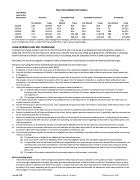
Debt When Loan Enters Repayment
Per Month $5,000 $58
10,000 115 25,000 288 50,000 575 100,000 1,151
Extended Fixed
Extended Graduated
Graduated
Standard
Per Total Month
$6,904 N/A 13,809 N/A 34,524 N/A 69,048 347 138,096 694
Total Per Month N/A N/A
N/A N/A
N/A N/A 104,109 284 208,217 568
Total Per N/A $40 N/A 79 N/A 198 112,678 396 225,344 792
Month
Total $7,275 14,550 36,375 72,749 145,498
Non-Consolidation Borrowers:
         For information on repayment options, debt management strategies, deferments, forbearance, consolidation and cancellation options as well as for complete loan terms, contact the Financial Aid Office or go to www.studentaid.gov.
LOAN ENTRANCE AND EXIT COUNSELING
A student borrowing a Direct Loan for the first time at time DEC is required to complete loan counseling before the loan is disbursed. All Direct Loan borrowers are required to complete loan exit counseling upon graduation, withdrawal, or dropping below halftime enrollment. Online Entrance and Exit Counseling must be completed online at www.studentloans.gov.
Borrowers are also encouraged to complete Financial Awareness Counseling also available on www.studentloans.gov.
Entrance counseling for Direct Subsidized and Unsubsidized loan borrowers must:
i. Explain the use of a master promissory note (MPN);
ii. Emphasize to the borrower the seriousness and importance of the repayment obligation the student borrower is assuming;
iii. Describe the likely consequences of default, including adverse credit reports, delinquent debt collection procedures under federal law,
and litigation;
iv. Emphasize that the student borrower is obligated to repay the full amount of the loan even if the student borrower does not complete
the program, does not complete the program within the regular time for program completion, is unable to obtain employment upon completion, or is otherwise dissatisfied with or does not receive the educational or other services that the student borrower purchased from the school;
v. Inform the student borrower of sample monthly repayment amounts based on—
(A) A range of student levels of indebtedness of Direct Subsidized Loan and Direct Unsubsidized Loan borrowers or student
borrowers with Direct Subsidized, Direct Unsubsidized, and Direct PLUS Loans, depending on the types of loans the borrower
has obtained; or
(B) The average indebtedness of other borrowers in the same program at the same school as the borrower;
vi. To the extent practicable, explain the effect of accepting the loan to be disbursed on the eligibility of the borrower for other forms of student financial assistance;
vii. Provide information on how interest accrues and is capitalized during periods when the interest is not paid by either the borrower or the U.S. Department of Education;
viii. Inform the borrower of the option to pay the interest on a Direct Unsubsidized Loan while the borrower is in school;
ix. Explain the definition of half-time enrollment at the school, during regular terms and summer school, if applicable, and the consequences
of not maintaining half-time enrollment;
x. Explain the importance of contacting the appropriate offices at the school if the borrower withdraws prior to completing the borrower’s
program of study so that the school can provide exit counseling, including information regarding the borrower’s repayment options and
loan consolidation;
xi. Provide information on the National Student Loan Data System (NSLDS) and how the borrower can access the borrower’s records;
xii. Provide the name of and contact information for the individual the borrower may contact if the borrower has any questions about the
borrower’s rights and responsibilities or the terms and conditions of the loan; and
xiii. For first-time borrowers, explain the limitation on eligibility for Direct Subsidized Loans and possible borrower responsibility for accruing
interest, including-
(A) The possible loss of eligibility for additional Direct Subsidized Loans;
(B) How a borrower’s maximum eligibility period, remaining eligibility period, and subsidized usage period are calculated;
(C) The possibility that the borrower could become responsible for accruing interest on previously received Direct Subsidized Loans
and the portion of a Direct Consolidation Loan that repaid a Direct Subsidized Loan during in-school status, the grace period, authorized periods of deferment, and certain periods under the Income-Based Repayment and Pay As You Earn Repayment plans; and
(D) The impact of borrower responsibility for accruing interest on the borrower’s total debt.
Exit counseling must:
i. Inform the student borrower of the average anticipated monthly repayment amount based on the student borrower’s indebtedness or on the average indebtedness of student borrowers who have obtained Direct Subsidized Loans and Direct Unsubsidized Loans, student borrowers who have obtained only Direct PLUS Loans, or student borrowers who have obtained Direct Subsidized, Direct Unsubsidized, and Direct PLUS Loans, depending on the types of loans the student borrower has obtained, for attendance at the same school or in the same program of study at the same school;
Page 38 of 88 Catalog Volume 62 -Version 3 Effective June 5, 2020


